
Achilles Tendon Pain & Tendinopathy in Vancouver
Pain or stiffness at the back of your heel can make walking, running, stairs and sport feel harder than they should. Achilles tendinopathy is one possible cause. At Cadence Physiotherapy & Rehab near Broadway & Cambie, we assess what is driving your symptoms and build a rehabilitation plan around your activities and goals.
Book a one-on-one physiotherapy assessment: choose an appointment online or call 604-738-4900.
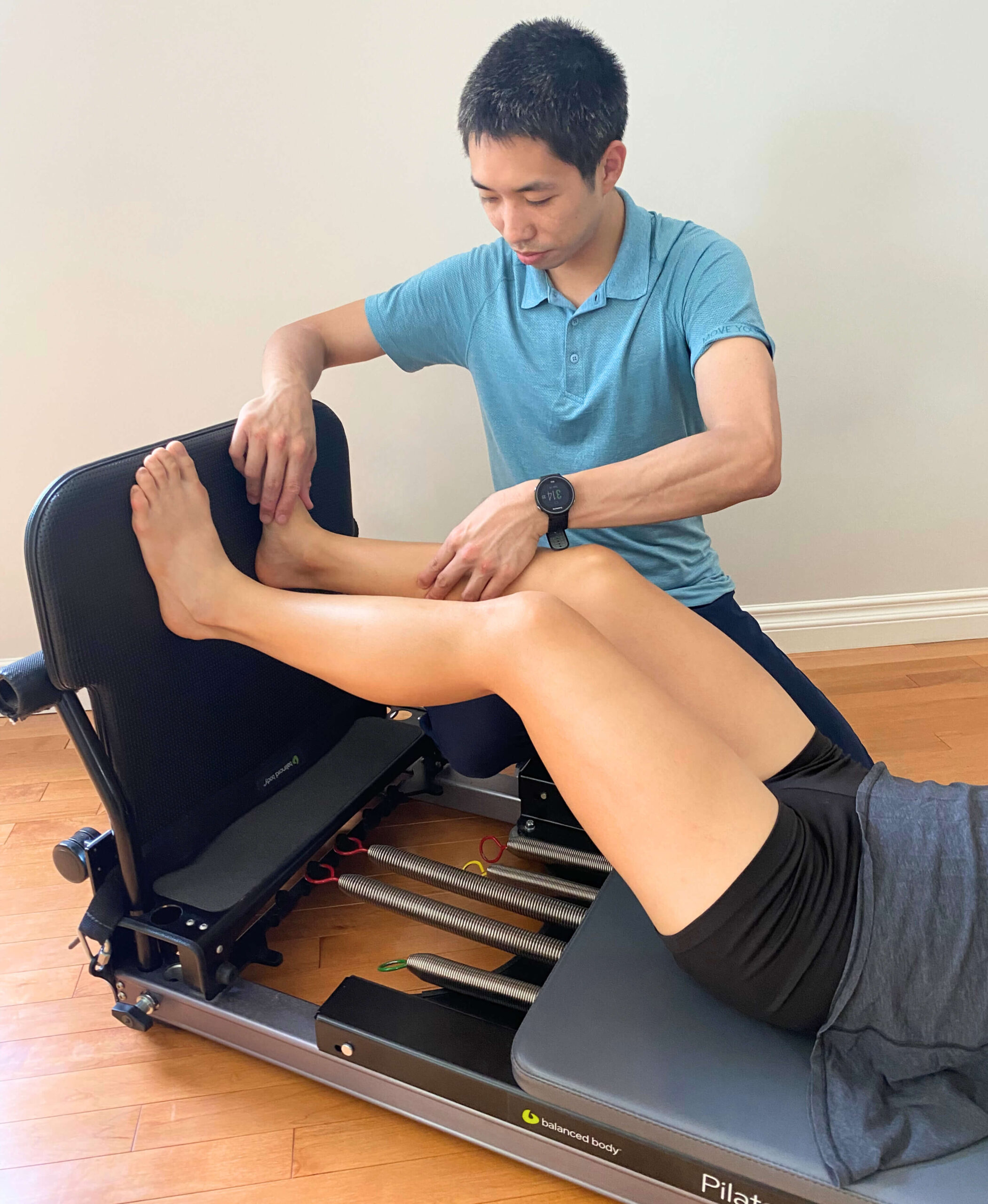
What is Achilles tendinopathy?
The Achilles tendon connects the calf muscles to the heel bone and helps you push off when you walk or run. Tendinopathy describes a painful tendon that is not coping well with the demands placed on it. The pain may be in the middle of the tendon or closer to its attachment at the heel. People sometimes call this “Achilles tendonitis,” although tendinopathy is the broader term.
Achilles pain can affect runners and other active people, but it is not limited to athletes. A sudden change in running, hills, walking volume or other activity can be relevant; so can calf strength, ankle mobility and your health history. Pain at the back of the heel can have other causes, which is why an assessment matters.
Common symptoms
- Pain or tenderness along the tendon or at the back of the heel
- Stiffness on the first steps in the morning or after sitting
- Symptoms during or after running, walking, stairs or jumping
- Swelling or thickening around the tendon
- Discomfort when rising onto your toes
Symptoms can change during activity and from one day to the next. The pattern, location and onset help your physiotherapist decide what to examine.
When to seek urgent assessment
If you felt a sudden snap or sharp pain at the back of your ankle and now have difficulty walking or pushing up onto your toes, seek prompt medical assessment. A sudden injury like this may be an Achilles tendon rupture and needs a different care pathway.
How physiotherapy can help
Your first visit includes a discussion of when the pain began, how it responds to activity, your training or walking demands, and what you want to get back to. Your physiotherapist examines the painful area and relevant strength and movement. A diagnosis often comes from the history and physical examination; imaging is considered when the findings suggest it may be needed.
Your plan may include:
- Adjusting activity to manage symptoms while keeping you moving where appropriate
- Progressive calf and tendon strengthening matched to your current capacity
- Reviewing ankle mobility, movement and training changes that matter to your case
- Guidance on gradually rebuilding walking, running, jumping or sport
- Tracking your response and changing the plan as you improve
There is no single exercise progression for everyone. Loading too quickly can aggravate symptoms, while a plan that never progresses may leave you unprepared for your usual activities. Your physiotherapist will tailor the amount and type of exercise to your presentation.
An individual path back to activity
Your plan moves at a pace guided by your symptoms, strength and activity goals.
Understand your symptoms, capacity and goals.
Progress calf and tendon loading to suit your response.
Gradually rebuild walking, running or sport demands.
Returning to running and sport
If running is your goal, rehabilitation should prepare the tendon for the demands of running, not just settle pain at rest. We can connect your Achilles plan with our running physiotherapy and gait analysis service when an assessment of running form, strength or training progression would be useful. For other activities, see our sports physiotherapy approach.
Recovery varies with the duration of symptoms and your starting capacity. Tendon rehabilitation can take months, and temporary flare-ups can occur. We use your function, symptoms and activity goals to guide progress rather than promising a fixed timeline.
Achilles tendon pain FAQs
Do I need to stop running completely?
Not always. Some people can continue modified activity while they rehabilitate; others need a temporary reduction. Your physiotherapist will help decide what is suitable based on your symptoms and examination.
Do I need an X-ray or MRI?
Many cases can be assessed through your history and a physical examination. If your presentation suggests another injury or a scan could change the plan, your clinician can discuss the appropriate next steps.
How long does Achilles tendinopathy take to improve?
It varies. A progressive strengthening and activity plan often takes several months, especially when symptoms have been present for a while. Your physiotherapist will review your response and adjust the plan over time.
Can physiotherapy help if my Achilles pain keeps returning?
Yes. An assessment can look at the tendon, calf strength, training changes and other relevant factors, then help you build a more sustainable return to activity. The cause and plan are individual.
Book an Achilles assessment in Vancouver
Cadence Physiotherapy & Rehab is at 706–550 W Broadway, near Broadway & Cambie and Broadway–City Hall station. Book a physiotherapy assessment or get directions and contact details.
Further reading: Guy’s and St Thomas’ NHS Foundation Trust: Achilles tendinopathy; Mersey Care NHS Foundation Trust: Achilles tendinopathy. This page provides general information and does not replace an individual assessment.